Vitamin D and Fertility: Deficiency Symptoms, Hormones and How Much to Take
By Ovasave · Published · Updated
Vitamin D sits at the centre of a lot of fertility questions, from whether a low level matters to whether it is safe in pregnancy. Below, we answer the questions people ask most often, in plain terms.
Does low vitamin D affect fertility?
Yes, it can. Vitamin D receptors are present in the testes, ovaries and uterus, so a deficiency can reach both female and male fertility. For women, that touches egg development, ovulation and implantation. For men, it touches sperm development and movement.
What is vitamin D deficiency and what are the symptoms?
Deficiency means your blood level has dropped below the healthy range, usually under 50 nmol/L (20 ng/mL in US units). Common signs include tiredness, aches, hair thinning, a smaller appetite, more frequent colds and low mood. If it goes untreated, it can contribute to osteoporosis, type 2 diabetes, kidney disease and infertility.
How to overcome vitamin D deficiency
Start with a blood test so you know where your level stands. Many people then need between 1,000 and 2,500 IU a day, and those who are severely deficient may need more under medical guidance. Ask for a recheck after you have been taking it for a while, so you can see whether the dose is working.
Can vitamin D deficiency affect your periods?
Vitamin D plays a part in ovulation, and low levels are common in PCOS, a condition that often disrupts cycles. If your periods are irregular or missed, talk to your doctor, who can check your vitamin D alongside other hormones.
Is vitamin D safe during pregnancy?
Yes, at the amounts found in prenatal vitamins and typical supplement doses. Vitamin D supports your baby's skeletal, immune and lung development, and it may lower the risk of gestational diabetes and pre-eclampsia. Prenatals usually contain 400 to 1,200 IU, so check your label. For adults, the upper limit is 4,000 IU a day, so do not go above that without medical advice.
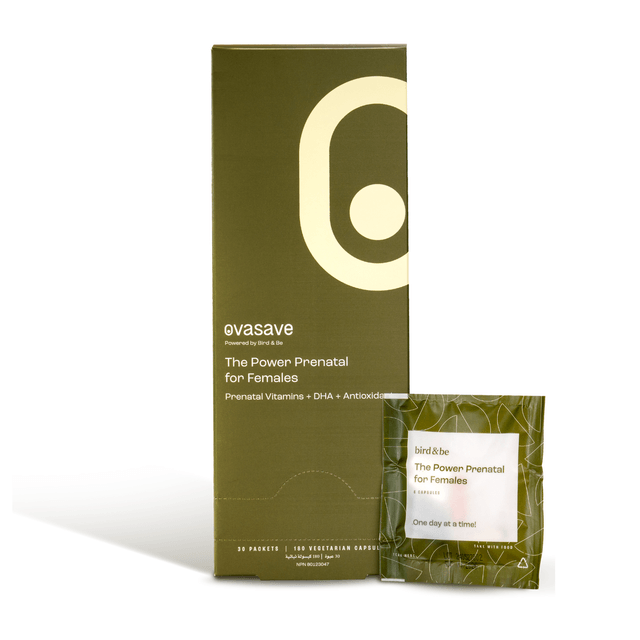
Ovasave's preconception and prenatal supplements are designed to close this gap. Each one provides 1,000 IU of vegan vitamin D3 in a daily serving, which covers the recommended daily dose without adding anything else. The Power Prenatal for Females is a good example. Because the vitamin sits in the same daily dose as your other prenatal nutrients, it is easier to stay consistent while you are trying to conceive and through pregnancy. If your blood test shows a lower level, your doctor may suggest extra vitamin D on top, and that is the time to add more, under their guidance.
How much vitamin D should you take?
Typical doses run from 1,000 to 4,000 IU, depending on your level. The general daily recommendation for most adults is 600 IU, while many people need 1,000 to 2,500 IU through the year. Your doctor can tailor the figure to your blood result.
Does vitamin D help male fertility?
Sperm cells carry vitamin D receptors, which supports their development, maturation and motility. Low levels have been found alongside lower sperm counts in men with infertility, and deficiency has been linked to higher miscarriage rates.
D2 vs D3: which is better?
D3 (cholecalciferol) is the form your body makes from sunlight, and it generally raises blood levels better than D2, especially at higher doses. D2 is plant-based, though most D3 supplements have traditionally used sheep's lanolin. Vegan D3 made from lichen is now available.
Can you get vitamin D from food?
Only a little. Trout, salmon, mackerel and cod liver oil are the richest sources, but reaching 600 IU from fish alone would take three to four ounces a day. Sunlight is the main source, though sunscreen, clouds, smog and indoor life all reduce it.
Does The Power Prenatal for Females contain vitamin D?
Yes. Each daily serving provides 1,000 IU of vegan vitamin D3. If your doctor recommends a higher dose, add it only under their guidance.
The Ovasave Take-Home
Vitamin D affects fertility for both partners and is generally considered safe in pregnancy at prenatal doses. Get a blood test, choose a vegan D3 source and let your doctor set any higher dose. You can compare Ovasave's options on the supplements page.
Quick FAQs
It can. Vitamin D receptors are found in the ovaries, uterus and testes, and vitamin D affects egg development, ovulation and implantation. Deficiency is also linked to a higher risk of miscarriage, so checking your level and correcting it if it is low is a smart move.
For most people, typical doses are safe. Taking more than 4,000 IU a day from supplements can cause harm, so get medical advice before going higher, and ask for your level to be rechecked if you do.
A blood test is the only reliable way to know. Levels below 20 ng/mL (about 50 nmol/L) are considered deficient. Ask your doctor to explain your result in the context of your own health.


References
Ovasave's articles are written after carefully evaluating evidence-backed sources and research and are regularly reviewed by medical professionals to ensure the highest standards of accuracy.
National Institutes of Health, Office of Dietary Supplements. Vitamin D: Fact Sheet for Health Professionals. https://ods.od.nih.gov/factsheet/VitaminD-HealthProfessional
National Institutes of Health, Office of Dietary Supplements. Vitamin D: Fact Sheet for Consumers. https://ods.od.nih.gov/factsheets/VitaminD-Consumer/
Mayo Clinic. Vitamin D supplement information. https://www.mayoclinic.org/drugs-supplements-calcium/art-20363792
Arnanz A, et al. Vitamin D in follicular fluid correlates with the euploid status of blastocysts in a vitamin D deficient population. Frontiers in Endocrinology. 2021;11:609524. doi:10.3389/fendo.2020.609524