

How to Increase Sperm Count
There is no one way to increase sperm count quickly, and knowing why saves a lot of wasted effort. Sperm takes roughly two to three months to produce, so every change you make today shows up in a test two to three months from now, not next week. What genuinely moves the numbers is unglamorous: diet, weight, alcohol, smoking, heat and avoiding steroids. Here is what each one does, and how long to give it.
One thing before the details. How to increase sperm count, how to increase sperm motility, how to increase sperm quantity and how to increase sperm volume aren't four separate projects. The same handful of changes move all of them, because they all run through the same production line.
Dietary changes
If you’ve searched what foods produce sperm fast, the honest answer is that nothing works fast. Sperm take roughly two to three months to develop from start to finish, so whatever you change today shows up in a sample about three months from now. That’s frustrating if you’re keen to get going, but it also means it’s never too early to start.
What actually helps is fairly straightforward. Studies of men’s diets and semen quality tend to point the same way: men who eat more fruit, vegetables, wholegrains, fish and pulses tend to have better sperm counts and motility than men whose diets lean on processed food. There’s no single magic ingredient. It’s the overall pattern that matters, which is why a Mediterranean-style diet comes up so often in fertility advice.
A few nutrients are worth knowing by name because they’re directly involved in making healthy sperm:
Zinc helps with sperm production and testosterone. You’ll find it in meat, shellfish (oysters are the famous one), eggs, dairy, pumpkin seeds and chickpeas.
Selenium protects sperm from damage and supports their movement. Brazil nuts consumed in moderation are a rich source. Fish, eggs and meat also provide it.
Folate is often thought of as a “women’s vitamin”, but it matters for sperm DNA too. Leafy greens, broccoli, beans, lentils and fortified cereals are good sources.
Omega-3 fatty acids form part of the sperm cell membrane. Oily fish like salmon, sardines and mackerel are good sources, with walnuts and flaxseed as plant-based options.
Antioxidants such as vitamins C and E and lycopene (found in cooked tomatoes) help counter oxidative stress, one of the main things that damages sperm.
It’s just as useful to know what to cut back on. Processed meats, sugary drinks, fried food and trans fats have all been linked to poorer sperm quality. Caffeine in moderation is generally fine. You don’t need to give up your morning coffee, but several energy drinks a day is a different story.
Then there are the two biggest ones. Cutting back on heavy drinking and quitting smoking will do more than any superfood. Smoking is linked to lower sperm count, poorer motility and more DNA damage. Heavy drinking lowers testosterone and sperm quality. The NHS advises keeping alcohol to no more than 14 units a week, spread across several days, and if you’re actively trying for a baby, lower is better.
Exercise and weight management

Both the NHS and WHO link excess weight to lower fertility, so working on a monitored weight loss regime is one of the few reliable answers to how to improve sperm quality.
There are three key things to note!
Extreme endurance training can work against you by disrupting your hormonal balance, raising your oxidative stress and raising the testicular temperature.
Steroids being consumed as a form of performance enhancing drugs deserve their own warning. Taking testosterone tells your body it no longer needs to make its own, which switches off production and can stop sperm entirely. It’s usually reversible, but recovery can take a year or more which is a long time to lose if you’re trying for a baby.
Long cycling sessions are the third, and here it’s heat rather than effort doing the damage. Your testicles sit outside the body because sperm production needs them slightly cooler than the rest of you, and hours in the saddle removes that margin. The same mechanism explains hot tubs, saunas and a laptop on your lap.
Aim for consistent and moderate!
Supplements for sperm health
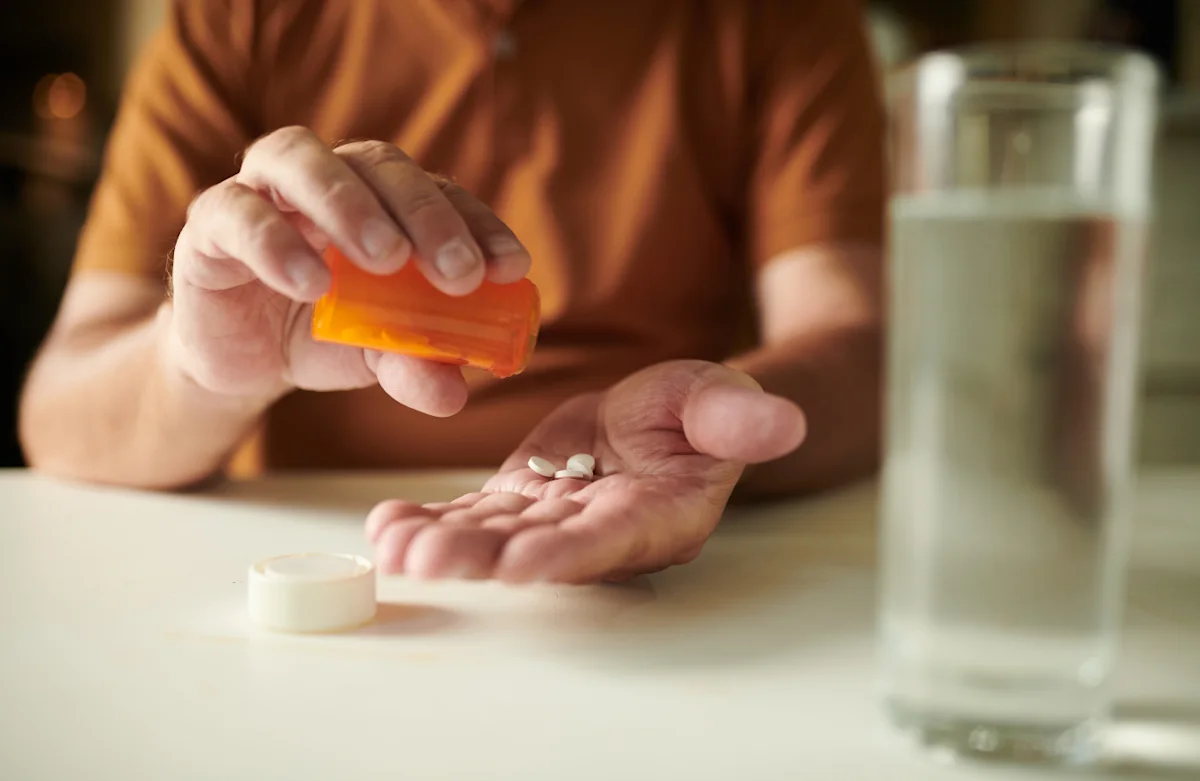
Which nutrients actually matter for sperm quality?
Six nutrients come up consistently in male fertility research, and they do three jobs: building sperm, powering them, and protecting them from damage.
Nutrient | What it does |
|---|---|
Omega-3 (especially DHA) | Forms part of the sperm cell membrane and supports hormone production and circulation |
Vitamins C and E | Work as a pair to limit oxidative stress, which can damage sperm DNA and slow movement |
B vitamins and folate | Involved in DNA production and repair — every sperm cell carries a full set of genetic material |
Zinc | Involved in testosterone production and sperm formation |
Selenium | Supports sperm structure and movement |
Carnitines | Carry fatty acids into the sperm's mitochondria, where energy for swimming is made |
CoQ10 | Powers the midpiece and helps protect mitochondria from damage |
Omega-3s are the one you can't make yourself. Your body produces neither EPA nor DHA, so they have to come from a diet or a supplement. DHA is concentrated in the sperm membrane, which is why it comes up in the context of movement, a stiffer membrane is a worse swimmer.
CoQ10 is the one most people ask about. Sperm need an unusual amount of energy for their size, and that energy is made in the midpiece, where CoQ10 works. Natural levels fall with age, which is why it comes up more from the mid-thirties onward. If you're taking it, start three months ahead so it covers a full production cycle.
Choosing the right supplement for male fertility. Not all supplements are created equal. When selecting a male fertility supplement, look for:
Evidence-based ingredients
Appropriate, clinically supported dosages
Third-party testing for purity and safety
Manufacturing that follows strict quality standards
When to see a doctor for increasing sperm count?
Prescription sperm production medicine exists, but it treats a specific cause, a hormone problem, an infection, a varicocele. You need a diagnosis first. Which brings us back, again, to testing.
Reach out to a urologist specializing in male fertility, or an andrologist. Their first step is usually a semen analysis. It checks how much semen there is, how it looks and behaves, and, under a microscope, how many sperm are present, how actively they swim, and whether they’re normally shaped. The results point to what’s really behind the problem, so any treatment that follows is aimed at the right thing.
The Ovasave Take-Home
There is no fast route, and that is the single most useful thing to know. Sperm takes two to three months to produce, so give any change a full three months before you judge it.
Work on the things that genuinely move the numbers such as diet, weight, alcohol, smoking, heat, and staying away from steroids and treat supplements as a way of covering nutrient gaps rather than a fix. Count, motility and volume all respond to the same changes.
If your partner is testing too, an at-home fertility and hormone test covers her side of the picture, so you are both working from facts rather than guesswork.
And if the numbers don't shift, that is a medical question with medical answers. A semen analysis tells you what is actually going on, which is one of the main ways treatment gets aimed at the right thing.
الأسئلة الشائعة
There is no single food that does it, and nothing works fast. A varied diet with enough zinc, selenium, folate and omega-3, plus plenty of fruit and vegetables, is what the evidence supports, and cutting back on heavy drinking and quitting smoking will do more than any superfood.
About three months. Sperm takes roughly two to three months to produce, so any change you make today shows up in a test two to three months from now. Give anything you try a full three months before judging it.
The same handful of changes that raise count: diet, weight, less alcohol, no smoking, avoiding heat and avoiding steroids. There is no separate approach for "stronger" sperm, because count, movement and shape all come off the same production line.
No. How to increase sperm count, how to increase sperm motility, how to increase sperm quantity and how to increase sperm volume aren't four separate projects, the same changes move all of them.
Prescription options exist, but they treat a specific underlying cause such as a hormone problem, an infection or a varicocele. That means you need a diagnosis first, which starts with a semen analysis from a urologist specialising in male fertility or an andrologist.

المراجع
Ovasave’s articles are written after carefully evaluating evidence-backed sources and are reviewed by medical professionals to ensure the highest standards of accuracy.
World Health Organization. Infertility fact sheet. https://www.who.int/news-room/fact-sheets/detail/infertility
StatPearls (NCBI Bookshelf). Histology, Spermatogenesis. https://www.ncbi.nlm.nih.gov/books/NBK553142/
Cleveland Clinic. Semen Analysis. https://my.clevelandclinic.org/health/diagnostics/21520-semen-analysis
Cochrane Database of Systematic Reviews. Antioxidants for male subfertility. https://www.cochrane.org/evidence/CD007411_antioxidants-male-subfertility